
The Core Difference Between Forming Forging and Ordinary Forging
In the forged wheel industry, “forming forging” and “ordinary forging” are two commonly mentioned process terms. Many car owners, modification enthusiasts, and distributors often confuse the concepts of the two and find it difficult to judge which process is more suitable for their needs. As a professional manufacturer with independent design and forging capabilities, Robust Wheels combines years of industry experience to detailedly disassemble the core differences, advantages and disadvantages of the two, helping you accurately select high-quality forged wheels that meet your needs.
First, it should be clear: both forming forging and ordinary forging essentially process raw materials such as 6061-T6 aluminum alloy into wheel blanks through the “forging” process. The difference lies in the forging method, precision control, and subsequent processing procedures, which ultimately directly affect the wheel’s strength, lightweight performance, appearance texture, and production cost. There is no absolute “superior or inferior” between the two; they are only suitable for different demand scenarios. Below, we analyze them one by one from the core dimensions.
I. Core Definitions: The Essential Differences Between the Two Forging Processes
1. Ordinary Forging (Also Known as “Free Forging/Conventional Forging”)
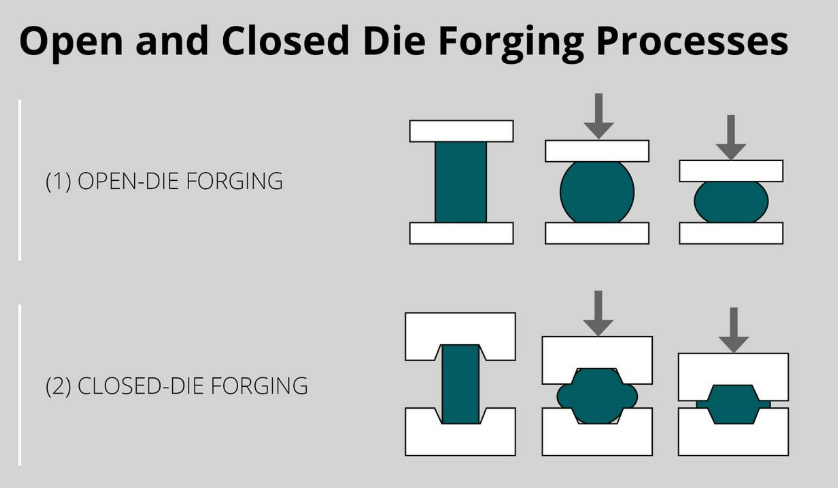
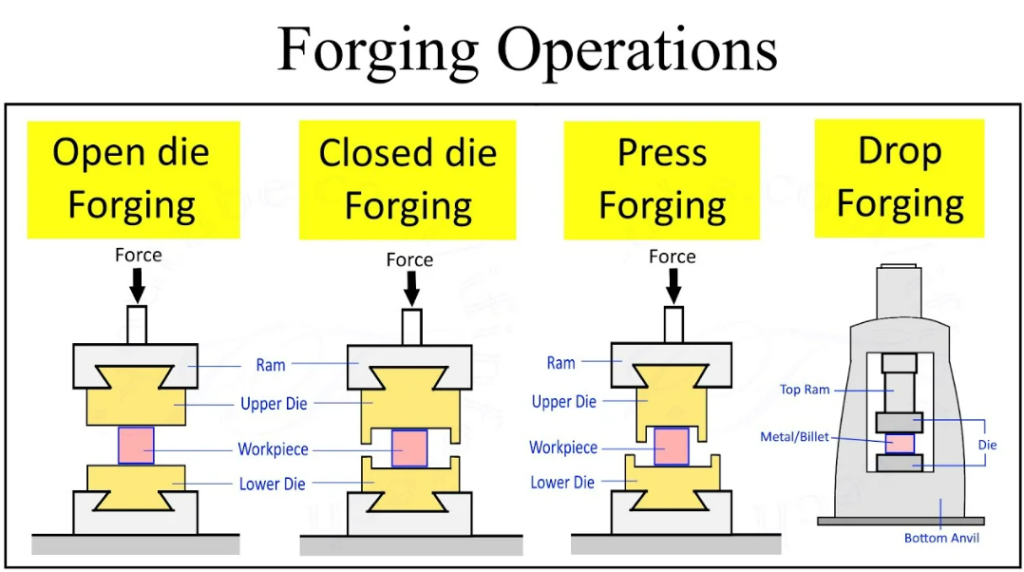
Ordinary forging is the most basic and traditional forging process, with the core logic of “free forging + subsequent machining”. Simply put, it involves heating an aluminum alloy ingot to a high temperature, freely forging it into an approximate wheel shape (blank) through the impact force or pressure of a forging press, and then performing precision processing through a CNC machine tool to grind out details such as the wheel’s spokes, edges, and center hole, and finally completing the finished product.
The core feature of this process is “forging without fixed molds” (or only using simple molds for positioning). During the forging process, the flow of metal is relatively free, and the shape and size of the blank are mainly controlled by the experience of the forging workers and the precision of the machine tool.
2. Forming Forging (Also Known as “Die Forging/Precision Forming Forging”)
Forming forging is a precision process upgraded on the basis of ordinary forging, with the core logic of “mold positioning forging + precision forming”. During the process, a dedicated forging mold (divided into upper mold and lower mold) will be made in advance according to the wheel’s design drawings. The heated aluminum alloy ingot is put into the mold, and through the high pressure of a ten-thousand-ton forging press, the metal is forged into a blank highly consistent with the contour of the finished product in one go under the constraint of the mold. Only a small amount of subsequent CNC machining is required to complete the finished product.
The core feature of this process is “mold restricting metal flow”. The forged blank has extremely high precision, and details such as spokes and concave surfaces are basically formed, requiring no large amount of subsequent processing. It is currently the mainstream process for mid-to-high-end forged wheels.
II. Core Differences: Understand the Differences at a Glance with a Table
| Comparison Dimension | Ordinary Forging | Forming Forging |
| Forging Method | No fixed mold, free forging, relying on manual experience | Dedicated mold positioning, high-pressure precision forging, high degree of automation |
| Blank Precision | Low, large gap between blank and finished product contour, requiring a lot of machining correction | Extremely high, blank highly fits the finished product contour, with little subsequent processing |
| Metal Fiber Direction | Disordered fiber direction, irregular, local uneven stress | Fiber direction is consistent with the wheel contour and force direction, meeting design requirements |
| Appearance Texture | Obvious machining marks, general precision of spoke edges and concave surfaces, rough details | Smooth forming, delicate spoke lines, no obvious machining marks on concave surfaces and edges, high-grade texture |
| Production Efficiency | Low, long forging time for each batch of blanks, cumbersome subsequent processing procedures | High, one-time mold forming, simple subsequent processing, suitable for mass production |
| Production Cost | Low, no need to customize dedicated molds, relatively simple equipment requirements | High, high mold customization cost, higher requirements for forging press pressure and precision |
| Application Scenarios | Low-end forged wheels, customized small-batch orders, products with low requirements for precision and texture | Mid-to-high-end forged wheels, mass production, special wheels for off-road/luxury/performance vehicles |
III. In-depth Analysis of Advantages and Disadvantages: Must-Read Before Selection
1. Advantages and Disadvantages of Ordinary Forging
- Lower Cost: No need to invest in high mold costs, low equipment threshold, suitable for customers with limited budgets or small-batch customization needs.
- High Flexibility: Not restricted by molds, can quickly adjust the wheel shape and size according to customer needs, adapting to special models or personalized designs.
- Mature Technology: Low technical threshold, simple production process, most low-end forged wheels on the market adopt this process, with stable supply.
- Insufficient Precision: The blank is roughly formed, and a large amount of subsequent machining will damage the metal fiber structure, leading to a decrease in the overall strength and toughness of the wheel.
- General Texture: Obvious machining marks, insufficiently delicate details such as spoke edges and concave surfaces, making it difficult to meet the appearance needs of high-end models.
- Low Efficiency: During mass production, the production cycle of each batch is long, unable to quickly respond to large-scale orders, and the delivery time is relatively long.
- Uneven Stress: Disordered metal fiber direction, the wheel is prone to local stress concentration in complex scenarios such as high-speed driving and off-roading, affecting service life.
2. Advantages and Disadvantages of Forming Forging
- Higher Strength: The metal fiber direction is consistent with the wheel’s force direction, without unnecessary machining damage, the overall structure is more stable, and the impact resistance and fatigue resistance are stronger, meeting international safety standards such as JWL/VIA.
- Better Lightweight Performance: Precision forming reduces material waste in subsequent machining, and can achieve more extreme lightweight on the premise of ensuring strength, improving vehicle handling and fuel economy.
- More Exquisite Appearance: The mold-formed spoke lines are smooth and delicate, with no obvious machining marks, and the concave surfaces and edges have extremely high precision, adapting to the high-end texture needs of luxury and performance models.
- Higher Efficiency: During mass production, one-time mold forming, simple subsequent processing procedures, shorter delivery time, and can quickly respond to large-scale orders from distributors and modification shops.
- Stable Quality: High degree of automation reduces manual operation errors, and each batch of wheels has strong consistency in size, precision and strength, with more controllable quality.
- Higher Cost: High mold customization cost, higher requirements for forging press pressure and precision, resulting in a higher product unit price than ordinary forged wheels.
- Insufficient Flexibility: After the mold is fixed, it is difficult to quickly adjust the wheel design, suitable for mass production, not for small-batch and highly personalized customization needs.
- Large Initial Investment: A large amount of capital is required for mold research and development and high-precision forging press procurement, which has higher requirements for the manufacturer’s strength.
IV. Robust Wheels Process Selection Suggestions
As focusing on high-end customized forged wheels, Robust Wheels adopts a production model of “forming forging as the mainstay and ordinary forging as the supplement” combined with the needs of different customers, ensuring both quality and flexibility:
- If you are a distributor or modification shop, need to purchase mid-to-high-end wheels in bulk, and pursue stable quality, exquisite appearance and reliable strength, you should first choose forming forging wheels, which are suitable for off-road, luxury and performance models, with higher cost performance and stronger repurchase rate.
- If you are an individual car owner with personalized customization needs (such as special spokes and sizes), and have a limited budget and low requirements for appearance precision, you can choose ordinary forging wheels to meet personalized needs while controlling costs.
- If you use it in complex scenarios such as off-roading and racing, or pursue extreme lightweight and safety, regardless of the budget, you should first choose forming forging wheels—its metal fiber structure is more stable, and its impact resistance is stronger, which can effectively avoid safety risks during driving.
Regardless of the process chosen, Robust Wheels insists on using 100% 6061-T6 aluminum alloy raw materials, combined with FEA finite element strength testing, to ensure that each wheel meets international safety standards.
Choosing forged wheels is essentially choosing safety and quality. Understanding the difference between forming forging and ordinary forging allows you to select the most suitable product according to your own needs. If you have more questions about forging processes and wheel customization, you can contact Robust Wheels at any time, and our professional team will provide you with one-on-one solutions.